
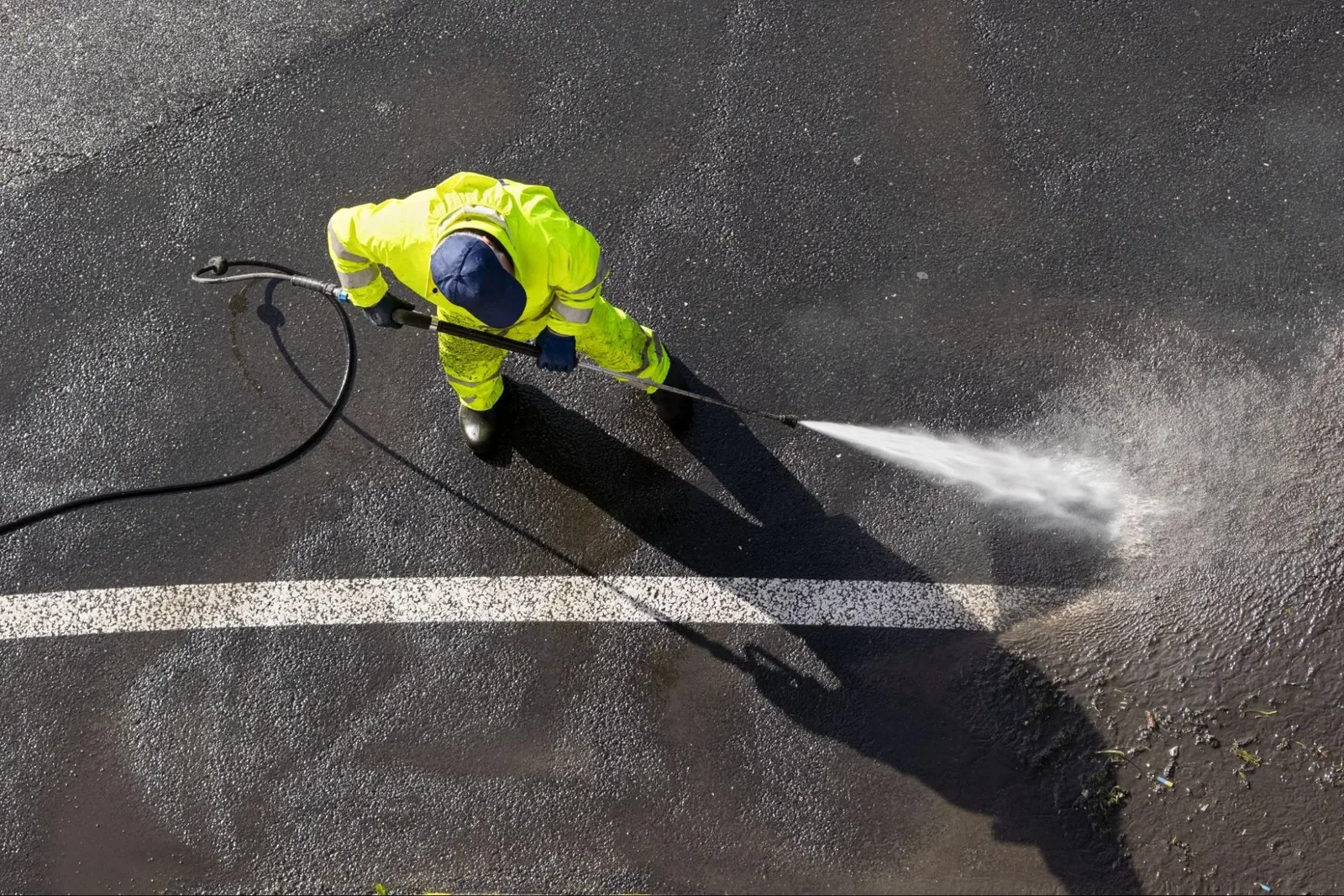
Power Washing vs Pressure Washing: What Is the Difference?
In everyday use, power washing and pressure washing mean the same service. A company that says power washing and one that says pressure washing usually do the same work.
In industry use there is one real difference, and it is heat. A business insurance publisher says it simply: a power washing machine uses heated water, and a pressure washer does not. Both run water at the same kind of pressure. What decides your result is the pressure level, the cleaning solution and the surface underneath.
Is power washing the same as pressure washing?
For most homeowners, yes. Both words describe cleaning an outdoor surface with water pushed through a pump and a nozzle. Search either term and the same kind of company comes back.
The gap shows up in equipment catalogs. There, power washing means a machine that heats the water before it leaves the nozzle. Pressure washing means the water stays at tap temperature.
The setup matters more than the name. A badly set pressure washer can ruin a soft surface. A well set one cleans the same surface without a mark. Duck Property Care matches the method and the pressure to the surface being cleaned.
What does heated water change about the clean?
Heat helps with anything oily. An equipment supplier’s buying guide says hot water machines are better for heavy duty grease and oil removal. Heat helps break down the grime. That is why heated water turns up on restaurant pads, drive-thru lanes and shop floors.
A business insurance publisher lists the same strengths: mildew, salt and grease. Around a normal home the gain is smaller. Green algae on siding and traffic dirt on a driveway come off with unheated water and the right cleaning solution.
How do power washing, pressure washing and soft washing compare?
Here is the short version, method by method. Read across the row that matches your surface.
| Method | Water temperature | Pressure level | Best surfaces | Main risk |
|---|---|---|---|---|
| Power washing | Heated | High | Greasy commercial concrete and oil stained slabs | Heat plus pressure can mark softer surfaces |
| Pressure washing | Not heated | High | Concrete driveways, sidewalks, patios, pool decks | Etching and striping on soft or older concrete |
| Soft washing | Not heated | Low | Stucco, siding, brick, shingle roofs | Needs the right cleaning solution to do the work |
Soft washing is the odd one out. It trades force for chemistry, using low pressure and detergents that kill mold, mildew and algae at the root. Our post on soft washing versus pressure washing walks through that method surface by surface.
Which method does each surface around your home need?
Concrete is the simple one. Driveways, sidewalks, patios and pool decks take pressure. A surface cleaner runs the flat parts and a wand cuts the edges. That is the work on most driveway and concrete cleaning visits.
Softer surfaces need a lighter touch. Stucco, siding, brick and shingle roofs get soft washing instead, so the solution does the lifting. Wood decks and fences take low pressure, because the grain furs up under a hard spray.
Glass sits in its own category. Windows are washed by hand with extension poles, scrubbers and squeegees, then rinsed clean. A pressure wand never touches glass.
What goes wrong when the pressure is too high?
Concrete shows the mistake first. Too much pressure in one spot cuts into the surface and leaves a lighter path. The slab ends up zebra striped. On older or soft concrete the top layer can etch, and the patch never fully matches again.
Siding and paint fail in a different way. A hard spray can strip paint and cut into stucco. It can also force water behind lap siding, where it sits against the sheathing. On a shingle roof, high pressure knocks granules loose and shortens the life of the roof.
Most of this damage takes time to appear. Water driven behind siding can show up weeks later as a stain on an inside wall.
Should you rent a machine or hire a pressure washing company?
Rental and box store machines sit at the light end. An equipment supplier’s buying guide rates light duty units at up to 1900 PSI. It puts heavy duty machines at 2900 PSI and above, with 3.0 GPM or more. Those figures describe machine classes in general.
Flow matters as much as pressure. Gallons per minute is what rinses loosened dirt away, and that is where small machines run short. A light machine on a wide driveway means slow passes and a patchy finish.
The other half of the job is knowing when to ease off. A rental gets you the tool. Reading the surface, picking the nozzle and holding the right distance is the part that protects your house.
Do San Antonio drought rules change when concrete can be washed?
They can. The city water utility limits washing impervious cover, meaning paved surfaces, during drought stages. The San Antonio Water System rule says washing impervious cover such as parking lots, driveways, streets or sidewalks is prohibited. Health and safety exceptions may be requested from the utility.
The rule names paved surfaces by type. If a drought stage is on when you book, ask us about timing on concrete work.
Hard water is the other local factor. The same utility puts typical hardness at 15 to 20 grains per gallon. When that water dries on glass or concrete it leaves mineral spots.
A proper clean lifts light spotting off the glass. Glass that minerals have already etched stays etched, and we will say so.
Getting the right method on your property
Your result comes down to pressure, solution and surface, set one at a time for what you own. The word on the truck is just a label.
Tell us what you want cleaned and we will tell you which method it takes. Pressure washing in San Antonio starts with a free estimate, and services start at $299. Call or text (512) 905-8038.